
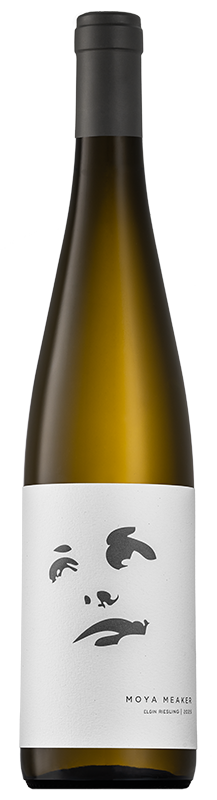
Moya Meaker Riesling 2025
Winemaker: Jean Smit
Cultivar: 100% Riesling
Origin: Habibi Farm, Elgin
Where the 2024 Riesling was a study in contrast, the 2025 is a study in architecture: less alcohol, more acid, and a frame you feel before you taste the fruit.
The vanguard on this wine is extroverted to the point of impatience; lemon verbena and orange blossom reach you long before the glass does. The palate balances those hugely expressive aromas by leading with texture rather than flavour. The wine is concentrated and powerful, carrying the grip of Granny Smith apple skin upfront, followed by an arresting line of sweet lemon candy acidity. That citrus core is filled out with accents of kiwi fruit, a gentle litchi note, and a touch of beeswax. The persistent finish takes the shape of intense bittersweet white grapefruit, with an encore of crisp green apple.
Elgin’s 2025 season ran late from the outset. Roughly 400 mm of rain fell in July alone, and above-average autumn and early-winter temperatures pushed the accumulation of cold units about two weeks behind the previous season. Flowering came about two weeks later than in 2024.
Elgin enjoyed a conspicuously cool 2025 season with almost no heat events. January ran 1 to 1.5 °C below the long-term average and a dry February held disease pressure down. Harvest began roughly two weeks later than usual across the district.
Moya Meaker’s Riesling vineyard was planted in 2006 on a southwest-facing slope on our estate in the Elgin Valley, making it 19 years old at the time of the 2025 harvest. The slope’s convex shape and 289 m elevation allow for excellent airflow — crucial in managing disease pressure in this sensitive cultivar. The vine rows run north to south, parallel to the prevailing winds, and are rooted in ancient Bokkeveld shale soils rich in clay. This combination of orientation, elevation, and soil delivers both tension and depth in the final wine.
Harvested by hand on 24 February, the fruit was chilled overnight and fully destemmed before being gravity-fed into the press — a gentle method that avoids crushing and the release of excessive phenolics. The grapes underwent six hours of skin contact in a sealed press, followed by a soft champagne cycle press.
Juice was settled in concrete tanks for 24 hours before being racked to tulip-shaped concrete vessels for a long fermentation that stretched over nearly two months. This slow ferment allowed optimal balance between residual sugar and acidity. The wine was bottled after nine months of lees contact and then spent a further nine months maturing in bottle prior to release.
This wine will be at its most expressive within five years of vintage, but with careful cellaring, it will continue to evolve and improve for decades to come.
TOTAL PRODUCTION: 3108 x 750ml
BOTTLING DATE: 3 December 2025
Origin: Elgin
Alc: 11.59%
pH: 2.86
TA: 7.6 g/L
RS: 7.8 g/L